Home / Guides / Tibetan Singing Bowls: A Beginner's Guide
Guide
Tibetan Singing Bowls: A Beginner's Guide
A singing bowl is a standing bell: a metal bowl that rings when struck and 'sings' with a long tone when you rub a mallet round its rim. Bowls are associated with Himalayan Buddhist cultures and are now widely used in meditation and relaxation practices. To start, choose a bowl of about 10–15 cm, learn the rim-rubbing technique, and ring it to open and close quiet time.
What a singing bowl is
Traditional bowls are hand-hammered from bronze alloys. Many modern bowls are machine-made or cast, which gives a more even shape and tone. 'Tibetan singing bowl' describes a style; bowls are made in Nepal, India and elsewhere.
How to play
Striking
Rest the bowl on your flat palm or a cushion and tap the side with the padded mallet.
Singing
Strike gently, then press the mallet against the outer rim and move it steadily round. Keep the pressure even and the tone will build.
Water
A little water in the bowl makes ripples and changes the tone. Dry the bowl afterwards.
Choosing a bowl
Size
Small bowls ring high and bright. Large bowls ring deep and long.
Sets
Chakra sets pair seven bowls with the seven chakras of yogic tradition.
Accessories
Mallets, cushions and rings change the sound and keep the bowl steady.
Ways to use a bowl
Ring it to begin and end meditation, journaling or a tarot reading, ring it in a room as a smoke-free cleansing, or simply listen until the tone fades. Sound baths are popular group sessions, offered for relaxation, not as therapy. Tingsha, small paired cymbals on a cord, are a portable cousin. UK delivery is £3.95, free on orders over £40, and usually takes 2–5 working days.
Choosing a size
- 8–12 cm: high, bright tone; easy to carry; good for beginners.
- 13–18 cm: the most popular range, with a richer tone.
- 20 cm and over: deep, long notes for group meditation.
Hand-hammered versus machine-made
Hand-hammered bowls show small hammer marks and have complex tones; machine-made bowls are smoother and more even. Both make a lovely sound; listen to the sound clips where available.
Playing tips
Strike the rim gently with the padded end of the mallet to start, then run the wooden end around the outside of the rim with even pressure. If the bowl rattles, slow down and press a little more firmly.
Care
Wipe with a soft dry cloth. Keep on its cushion so it rings freely. Brass naturally darkens; a little brass polish brings it back if you like a shine.
Bowls in Buddhist practice
In Himalayan monasteries bowls are mainly used as offering vessels and to mark the start and end of meditation. Sound baths are a modern Western practice.
Where singing bowls come from
Bowls of bronze and bell metal have been made across the Himalayas, India, Nepal and Tibet for centuries, used as food and offering vessels and in Buddhist ritual. The idea of 'singing' them by rubbing the rim, and of sound baths, became popular in the West from the 1970s. Today most bowls are made in Nepal and India, by hand or by machine.
Step by step: your first sound
- Rest the bowl on its cushion or on the flat palm of your hand. Don't grip the sides, which dampens the sound.
- Strike the outside of the rim gently with the padded end of the mallet.
- Listen until the sound fades completely; this is a meditation in itself.
- To make it sing, hold the mallet like a pen and press the wooden end against the outside rim.
- Circle slowly and steadily with even pressure. The tone builds after two or three turns.
- If it buzzes, slow down; if it doesn't sing, press a little more firmly.
Ways to use a bowl at home
- Strike once to start and end a meditation or yoga session.
- Use it as a gentle alarm for a five-minute breathing break.
- Ring it when you come home to mark the change from work to rest.
- Play it at the full moon as part of a simple ritual.
- Some people place crystals in a bowl to 'cleanse' them with sound, a modern tradition.
Tingsha and other sound tools
Tingsha are two small cymbals joined by a cord. Struck edge to edge, they make a bright, clear chime used in Tibetan practice to begin a ritual. They are small, affordable and a good companion to a bowl.
Bowls and children or pets
Children usually love striking a bowl. Show them how to hold it and keep the mallet gentle. Some dogs and cats dislike sudden high tones, so play softly at first and let them leave the room.
Looking after the sound
A bowl's tone stays the same for life if you avoid dents and cracks. Don't drop it or stack heavy bowls inside each other without cloth between them. Keep the mallet's leather or suede wrap clean; if it hardens, gently rough it with fine sandpaper to bring back a soft tone.
Bowls in daily life
Leave your bowl somewhere visible. Striking it once when you start work, once at lunch and once at the end of the day is a simple way to mark time mindfully.
Singing bowls in stock
Real pieces in stock today, with current prices. Each product page lists size, materials and what is included.
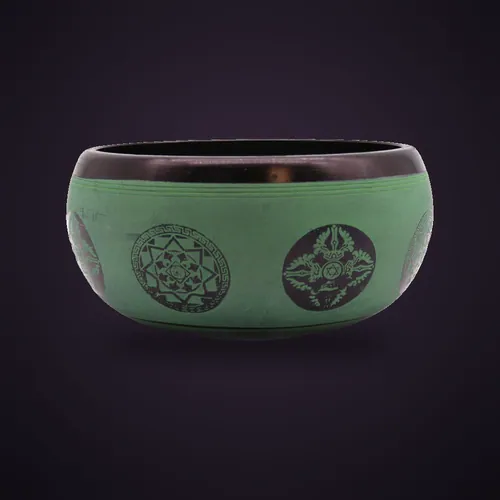
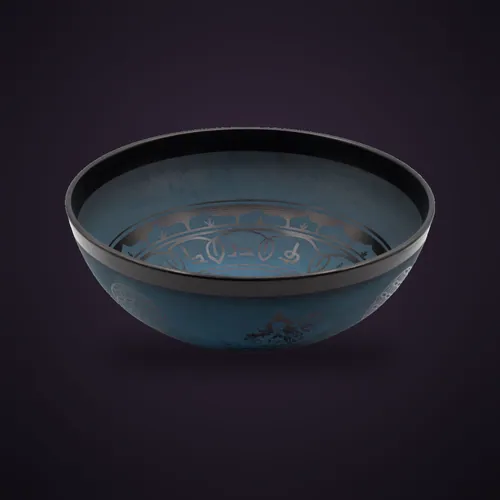
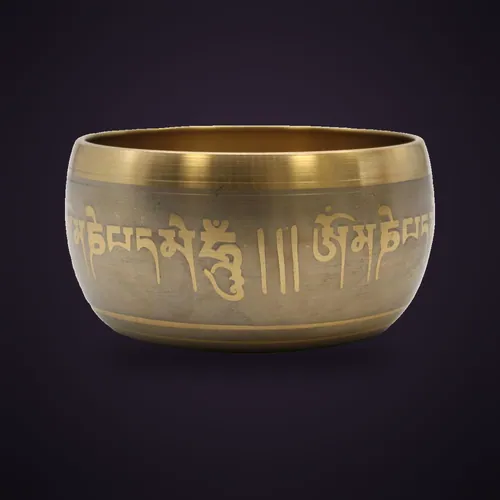
- Earth Powder Singing Bowl - Mandala Buddha - 16cm: £28.00.
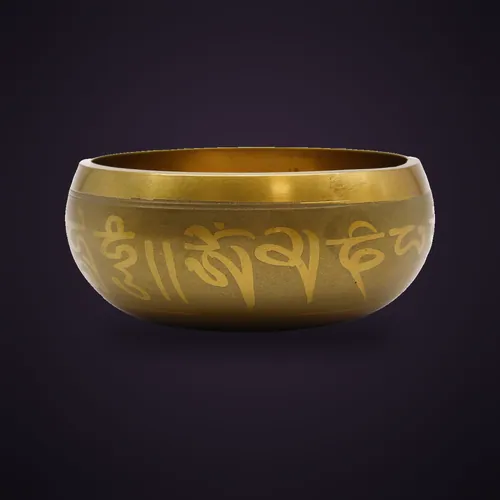
- Ganesh Singing Bowl: £27.20.
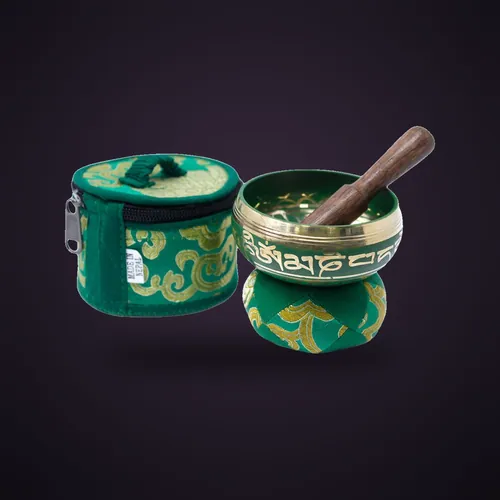
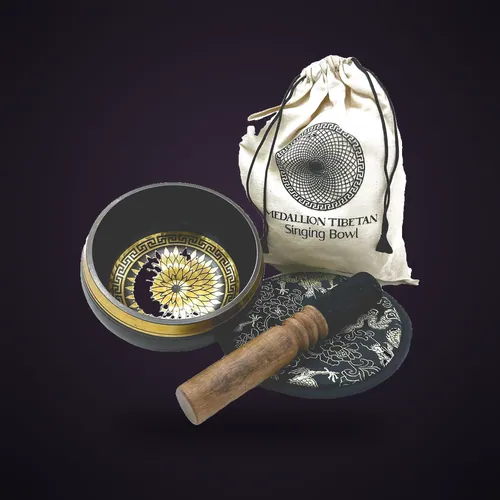
- Mini Singing Bowl Gift Set - Green: £23.60.
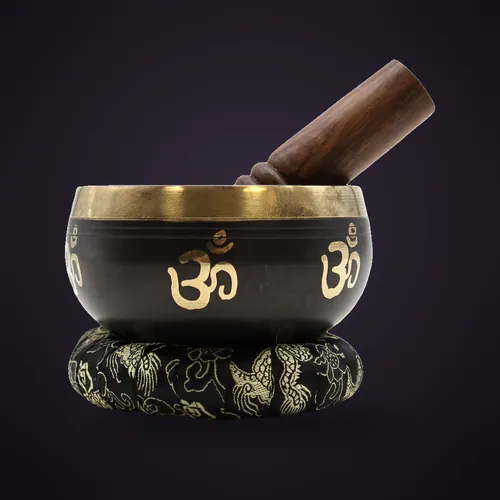
- Yoga Om Singing Bowl Set: £46.80.
- Premium Brass Tibetan Tingsha - Plain Traditional - approx 7.5cm (345gm): £29.60.
- Premium Brass Tibetan Tingsha - Lucky Symbols - approx 6cm (155gm): £15.20.
Words worth knowing
- Mallet (striker): the wooden or padded stick used to strike or rim a bowl.
- Rimming: running the mallet around the rim to make the bowl sing.
- Tingsha: a pair of small cymbals joined by a cord.
- Sound bath: a session of relaxing to bowls and other instruments, a modern practice.
Shop this guide
 Free UK delivery
 Free UK delivery
 Free UK delivery
 Free UK delivery
Questions answered
How do you make a singing bowl sing?
Rub the mallet steadily round the outer rim with even pressure.
What size bowl is best for beginners?
About 10–15 cm is easy to hold and play.
Are singing bowls a therapy?
They are a traditional and relaxation tool, not a medical treatment.
What are tingsha?
Small paired cymbals on a cord, struck together for a clear ring.
Why does my bowl rattle instead of singing?
Usually the mallet is moving too fast or with too little pressure. Slow down and press a little more firmly.
What size singing bowl should I buy first?
A bowl of 10–16 cm is easy to hold and play and suits most beginners.
Can I wash a singing bowl?
Wipe it with a soft cloth. If needed, rinse briefly with warm water and dry it straight away to avoid marks.
Do singing bowls need tuning?
No. Each bowl's note is set by its shape and metal, and stays the same for life unless it is dented.
Are singing bowls loud?
Struck firmly, a bowl rings clearly through a room, but rimming gives a soft, steady tone. Neighbours rarely hear more than a gentle hum.
Should I put water in a singing bowl?
A little water makes the surface ripple and dance when you play, which is fun to watch. Dry the bowl fully afterwards.
Ask Starseed
Try: