Home / Guides / Amethyst: Meaning, Folklore and Care
Guide
Amethyst: Meaning, Folklore and Care
Amethyst is purple quartz. Traditionally kept by the bed or on a desk as a calming, reflective stone. Its name comes from the Greek amethystos, 'not drunk', from an old belief that it guarded against drunkenness. This guide covers what it is, its folklore and modern traditions, how people use it, how to care for it and which stones it pairs with.
What it is
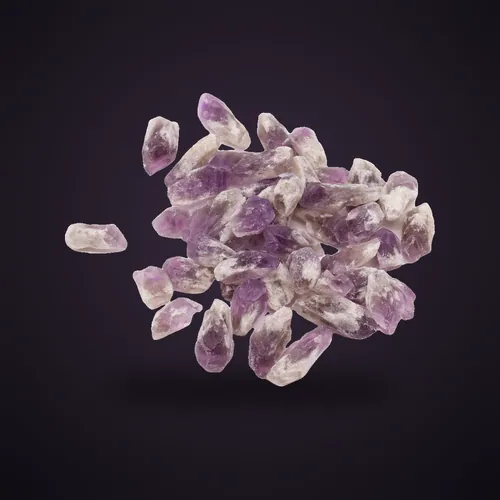
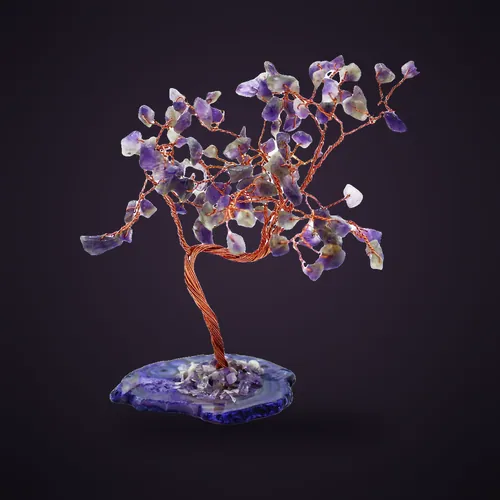
Amethyst is purple quartz. Like all natural stones, every piece differs slightly in colour, clarity and markings. That is normal and not a flaw. You will find it as small tumbled pocket stones, raw chunks, clusters, points, spheres and carved shapes. Tumbled stones suit carrying and gifting; larger pieces make a focal point on a shelf or altar.
Folklore and tradition
Traditionally kept by the bed or on a desk as a calming, reflective stone. Its name comes from the Greek amethystos, 'not drunk', from an old belief that it guarded against drunkenness. Modern crystal tradition, which grew up largely in the twentieth century, layers new meanings onto older stories. Both are best enjoyed as ways of giving a stone personal meaning, not as claims of any effect. Many people like to keep a note of where and when they bought a stone, so its story becomes part of their own.
How people use it
On the altar or shelf
Many people keep amethyst where they will see it each day: a bedside table, a desk or an altar.
With the moon
Full-moon rituals often use a single stone as a focus. Set it out, light a candle, write an intention and sit quietly for a few minutes.
In grids and sets
It sits well in a crystal grid with other stones, and appears in many crystal kits.
As a gift
A amethyst piece with a handwritten card about its folklore makes a simple, thoughtful present.
Care
Fades in strong sunlight, so keep it out of bright windows. Store it apart from harder stones, dust it regularly and keep small pieces out of reach of young children and pets. See our crystal care guide for more.
Good companions
Clear quartz
Often called the 'master' stone in modern crystal tradition, used as an all-purpose piece and in crystal grids.
Rose quartz
Linked in modern tradition with love, friendship and self-kindness, which makes it one of the most popular gift stones.
Citrine
Called the 'merchant's stone' in folk tradition, kept near tills and cash boxes for prosperity. Much citrine sold today is heat-treated amethyst, which is a normal part of the trade.
Black tourmaline
Traditionally placed by doorways and windows as a protective stone, and a favourite in witchy and gothic collections.
Selenite
Named after Selene, the Greek moon goddess. Used in modern tradition to 'cleanse' other crystals, often as plates, wands and bowls.
Obsidian
A mirror-black stone with a long history as scrying mirrors and blades. In modern tradition it is a grounding, protective stone.
Labradorite
Prized for its flash of blue and green, called labradorescence. In tradition it is a stone of magic and intuition.
How to tell good amethyst from poor copies
Most amethyst sold in the UK is genuine, but a few checks help you buy with confidence.
- Natural stones are rarely perfectly even in colour. Small cloudy patches, lines and inclusions are normal and a sign of real material.
- Glass imitations often contain round air bubbles and feel warmer in the hand than real stone, which stays cool for longer.
- Very bright or uniform colours can mean dyeing or coating. Reputable sellers say when a stone is treated, so ask if it is not clear.
- Price is a clue: a large, flawless, intensely coloured piece for a few pounds is unlikely to be what it claims.
Which shape of amethyst to choose
The same stone comes in many shapes, and the shape mainly changes how you will use it.
- Tumbled stones: small, smooth and cheap. Good for carrying in a pocket, adding to a pouch or giving in multiples.
- Points and obelisks: stand upright on a shelf or desk and make a neat focal point.
- Spheres: show off colour and inner patterns from every angle; use the stand to stop them rolling.
- Raw pieces and clusters: show the natural crystal form; best for display, as edges can be sharp or fragile.
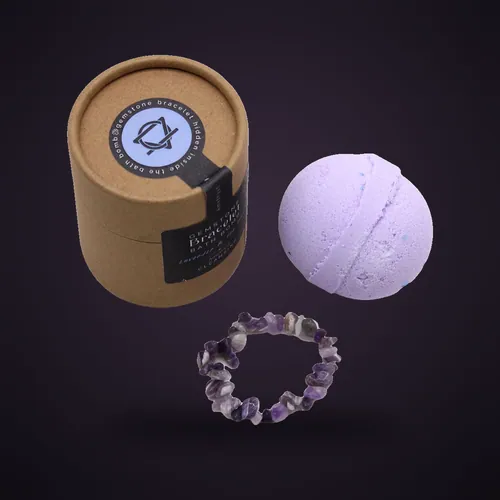
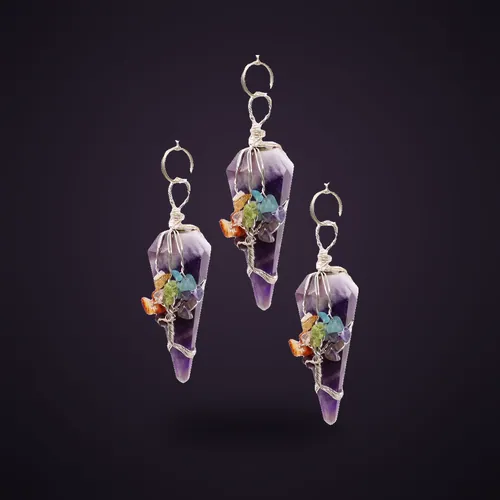
- Jewellery and pendulums: for wearing the stone or for pendulum practice. Check the metal and cord as well as the stone.
A simple way to start with amethyst
Choose one piece and give it a place you see every day. Many people like to hold a new stone for a minute, notice its weight, colour and temperature, and decide what they want it to remind them of. Writing that down in a notebook, with the date, turns the stone into a small personal marker rather than something you need to believe in.
If you like ritual, the new moon is a traditional time to set an intention and the full moon a time to look back on it. You do not need special tools: a candle, a quiet ten minutes and your amethyst are enough.
Buying amethyst as a gift
Amethyst makes an easy present because it is affordable in tumbled form and looks special in larger pieces. Add a handwritten card explaining its folklore, and if you are unsure of the person's taste, a tumbled stone in a small pouch or a piece of jewellery is the safest choice. Orders over £40 travel free in the UK, so a stone alongside a candle or incense is good value.
Signs, chakras and birthdays
- Star signs: Aquarius, Pisces.
- Chakra: Third eye chakra.
- Chakra: Crown chakra.
- Birthstone: February.
Words worth knowing
- Mohs scale: a 1 to 10 scale of scratch hardness; quartz is 7, diamond 10.
- Tumbled stone: a small stone polished smooth in a rotating barrel.
- Point: a stone cut or grown to a single tip.
- Cluster: a group of crystals grown together on a base.
- Geode: a hollow rock lined with crystals.
- Inclusion: a tiny piece of another mineral or a bubble trapped inside a stone; normal in natural material.
- Treated: a stone that has been heated, dyed, coated or filled to change its look.
Shop this guide
Questions answered
What is amethyst said to be good for?
In tradition: Traditionally kept by the bed or on a desk as a calming, reflective stone. Its name comes from the Greek amethystos, 'not drunk', from an old belief that it guarded against drunkenness. These are beliefs, not medical claims.
How do I clean amethyst?
Fades in strong sunlight, so keep it out of bright windows.
Is amethyst expensive?
Small tumbled pieces are inexpensive. Large, clear or unusual pieces cost more.
How long does delivery take for items in the Amethyst guide?
UK delivery is £3.95, free on orders over £40, and usually takes 2–5 working days.
Can amethyst go in water?
Yes, briefly. Amethyst is quartz, so a rinse in lukewarm soapy water is fine. Dry it straight away and avoid very hot water.
Can I sleep with amethyst by the bed?
Many people keep amethyst on a bedside table. Keep small stones out of the bed and away from children and pets, who could swallow them.
Does amethyst fade?
Yes. Strong sunlight can slowly fade amethyst, so keep it out of sunny windows.
How should I store amethyst?
In a soft pouch or lined box, apart from harder stones and away from bright windows.
Does the Amethyst guide make any health claims?
No. We describe spiritual and traditional uses as tradition and belief, never as health, medical or financial advice. For any health concern, speak to a qualified professional.
Ask Starseed
Try: