Home / Guides / The Wheel of the Year: A Guide to All Eight Sabbats
Guide
The Wheel of the Year: A Guide to All Eight Sabbats
The Wheel of the Year is a modern pagan calendar of eight festivals, or sabbats. There are four solar points, the solstices and equinoxes (Yule, Ostara, Litha and Mabon), and four Gaelic-rooted fire festivals between them (Imbolc, Beltane, Lughnasadh and Samhain). It took its current form in mid-20th-century British Wicca and Druidry, but draws on much older seasonal customs. Below are the dates, the traditions behind each one and simple ways to mark them.
Where the wheel comes from
The solstices mattered to the people who built monuments such as Stonehenge and Newgrange, which line up with solstice sunrises and sunsets. The Gaelic quarter days of Samhain, Imbolc, Beltane and Lughnasadh appear in early Irish literature. The eight festivals were joined into one calendar in the 1950s by Gerald Gardner and Ross Nichols. Today the wheel is shared by Wiccans, Druids, witches and many people who simply like to live by the seasons.
Samhain: 31 October – 1 November
Tradition
The Gaelic festival marking summer's end and the start of the dark half of the year. In tradition the veil between worlds is thin, so it is a time to honour ancestors. Many Halloween customs, such as guising and turnip lanterns, grew from it in Scotland and Ireland.
Ways to mark it
Set a place for ancestors, light a black or orange candle, carve a turnip or pumpkin lantern, and take a quiet walk at dusk.
On the altar
Black candles, obsidian, smoky quartz, myrrh or dragon's blood incense, skulls and cauldrons.
Yule: the winter solstice, around 21 December
Tradition
The longest night, when the sun is 'reborn' and days begin to lengthen. Evergreens, the Yule log and wassailing all come from midwinter traditions across Britain and northern Europe. At Newgrange in Ireland the solstice sunrise lights the inner chamber.
Ways to mark it
Keep vigil and greet the solstice sunrise, burn a Yule log or a large candle, decorate with holly, ivy and pine, and give handmade gifts.
On the altar
Red, green and gold candles, pine or frankincense incense, garnet, clear quartz.
Imbolc: 1–2 February
Tradition
A Gaelic festival of first stirrings, linked with the goddess and saint Brigid, the lambing season and the first snowdrops. Brigid's crosses are woven from rushes, and Candlemas (2 February) blesses candles.
Ways to mark it
Weave a Brigid's cross, spring-clean your home or altar, light white candles and plant seeds indoors.
On the altar
White candles, amethyst, moonstone, lavender or vanilla incense.
Ostara: the spring equinox, around 20 March
Tradition
Day and night in balance as spring arrives. The modern name follows Bede's mention of a goddess Eostre, though how far back her worship went is debated. Eggs and hares are old spring symbols.
Ways to mark it
Decorate eggs, sow seeds, take a dawn walk and note what is blooming.
On the altar
Green and yellow candles, rose quartz, green aventurine, floral incense.
Beltane: 1 May
Tradition
The Gaelic festival of summer's start, with bonfires, maypoles, May Day garlands and greenwood customs. Edinburgh's Beltane Fire Festival on Calton Hill is a modern revival.
Ways to mark it
Gather blossom (never from protected plants), dance round a maypole, jump a small safe fire or light a red candle, and wash your face in the May morning dew.
On the altar
Red and green candles, carnelian, rose incense, ribbons.
Litha: the summer solstice, around 21 June
Tradition
The longest day. Thousands gather at Stonehenge each year for the managed solstice sunrise. Midsummer bonfires and St John's wort gathering are old customs.
Ways to mark it
Watch the sunrise or sunset, gather herbs, have a picnic and light a gold candle at noon.
On the altar
Gold or yellow candles, citrine, sunstone, sandalwood incense.
Lughnasadh (Lammas): 1 August
Tradition
The first harvest, named for the Irish god Lugh. Lammas, 'loaf mass', saw bread from the new grain blessed in church. Hilltop gatherings and fairs mark it in Ireland.
Ways to mark it
Bake bread, make a corn dolly, give thanks for what you have gathered this year.
On the altar
Orange and gold candles, tiger's eye, carnelian, frankincense.
Mabon: the autumn equinox, around 22–23 September
Tradition
Balance again, as nights begin to outweigh days. It is the second harvest of apples and fruit. The name Mabon was applied in the 1970s, which shows how young some modern names are.
Ways to mark it
Pick blackberries (by tradition before 29 September, when folklore says the Devil spoils them), make cider or jam and share a harvest meal.
On the altar
Brown and red candles, smoky quartz, cinnamon or apple incense.
Southern hemisphere and other variations
In the southern hemisphere the wheel is often turned around, so Samhain falls on 30 April. Some traditions use other names, and solstice and equinox dates shift by a day or so from year to year. UK delivery is £3.95, free on orders over £40, and usually takes 2–5 working days.
Where to start
Pick one festival that falls soon and mark it simply. Over a year, the wheel becomes a calendar of small celebrations.
Marking the wheel in small ways
You don't need a ritual for every festival. Note sunrise and sunset times on each sabbat and watch them change. Cook one seasonal dish. Change a few things on a shelf. Walk the same route on each festival and notice what has changed. Over a year, these small habits connect you to the seasons more than any single big celebration.
The wheel in the southern hemisphere
In Australia and New Zealand the seasons are reversed, so many pagans there celebrate Yule in June and Samhain at the end of April.
Solstices and equinoxes, 2026–2028 (UK time)
| Festival | 2026 | 2027 | 2028 |
|---|---|---|---|
| Ostara (spring equinox) | 20 March 2026, 14:45 GMT | 20 March 2027, 20:24 GMT | 20 March 2028, 02:17 GMT |
| Litha (summer solstice) | 21 June 2026, 09:25 BST | 21 June 2027, 15:10 BST | 20 June 2028, 21:01 BST |
| Mabon (autumn equinox) | 23 September 2026, 01:05 BST | 23 September 2027, 07:01 BST | 22 September 2028, 12:45 BST |
| Yule (winter solstice) | 21 December 2026, 20:50 GMT | 22 December 2027, 02:42 GMT | 21 December 2028, 08:20 GMT |
Words worth knowing
- Sabbat: one of the eight festivals.
- Esbat: a full moon ritual.
Shop this guide
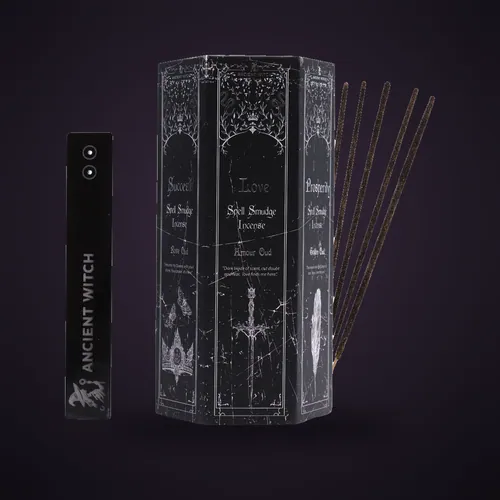
Ancient Witch Spell Incense
Pyramid Shape Display Incense - Set of 5 Ancient Witch Scents & Spells
£20.00

Questions answered
What are the eight sabbats?
Samhain, Yule, Imbolc, Ostara, Beltane, Litha, Lughnasadh (Lammas) and Mabon.
Is the Wheel of the Year ancient?
Its parts are old seasonal customs, but the eight-festival calendar itself dates from the mid-20th century.
When is the pagan new year?
Many pagans treat Samhain as the start of the new year.
Do I need to be pagan to celebrate?
No. Many people mark the seasons simply to feel closer to nature.
What is the difference between sabbats and esbats?
Sabbats are the eight seasonal festivals. Esbats are moon rituals, usually held at full moon.
Does the Wheel of the Year guide make any health claims?
No. We describe spiritual and traditional uses as tradition and belief, never as health, medical or financial advice. For any health concern, speak to a qualified professional.
Do I have to celebrate all eight festivals?
No. Many people mark only a few.
Which sabbat should I start with?
Whichever comes next. Start simply with a candle, a walk and a seasonal meal, and build from there.
Ask Starseed
Try: